
We exist because technology transformations kept failing — and nobody was designing for the
storyteller...
About Us
As If Pictures was founded by people who come from journalism and media production. We saw
the same pattern everywhere: organizations spending millions on new technology, and journalists struggling to use it — because nobody had asked them what they actually needed. We built a company to fix that.

About
We exist because technology transformations kept failing and nobody was designing
for the storyteller.
As If Pictures was founded by people who come from journalism and media production. We saw the same pattern everywhere: organizations spending millions on new technology, and journalists struggling to use it because nobody had asked them what they actually needed. We built a company to fix that.

The Origin Story
How we got here
Every company has an origin story.
Ours starts with a frustration.
We came from newsrooms. We'd produced live bulletins, cut packages on deadline, built graphics under pressure, and worked in the controlled chaos that is a 24-hour news operation. We understood how stories get made, not in theory, but in the muscle memory of doing it every day.
Then we moved to the technology side. We deployed MAM systems, configured NRCS platforms, designed cloud architectures, and built the infrastructure that modern newsrooms run on. We understood how the technology works; not from a vendor's demo, but from building and configuring it ourselves.
And from that vantage point: sitting between the editorial world and the technology world, we saw something that kept going wrong. Technology transformations were being designed by people who understood the technology but had never produced a news bulletin. The result was systems that made perfect sense on a whiteboard and fell apart the moment a journalist tried to file a package under deadline pressure.
The workflows didn't fit. The metadata didn't match how journalists think. The training was a PowerPoint deck emailed once and forgotten. The automation was built around outputs, not stories. And the people designing all of this had never sat in a gallery during a breaking news event, had never watched a reporter wrestle with a mobile upload from the field, had never experienced the moment when a producer realizes the system can't do what the editorial plan requires.
We founded As If Pictures to solve that gap. A company that designs technology transformations from the storyteller outward, because we are storytellers ourselves.
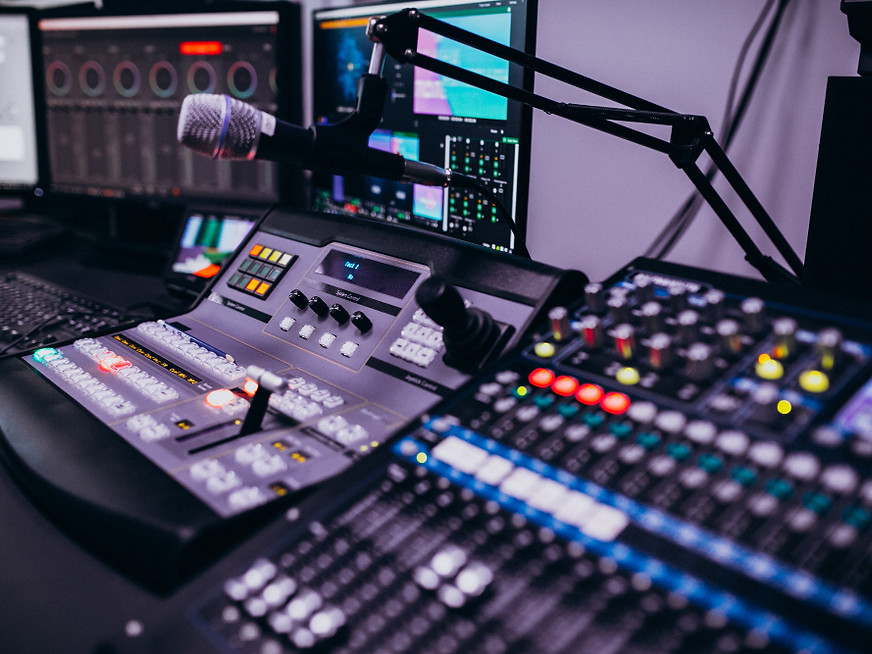
Disruptive Design is Disinterested Design
This is the founding principle of everything we do. When technology is designed without understanding the people who will use it, it disrupts their work rather than improving it. The design is "disinterested", indifferent to the real needs of the user. It was built to solve a technical problem or satisfy a procurement requirement, not to serve the person who has to tell the story.
We believe that every design decision in a newsroom transformation - from cloud architecture to how a lower third behaves in a rundown - should begin with one question: what does the storyteller need? If the answer isn't informing the design, the design is disinterested. And disinterested design, no matter how technically sophisticated, will be resisted, worked around, and eventually abandoned.

Intentional Technology
Technology should be intentional — chosen, configured, and deployed because it serves a defined purpose in a designed workflow. Not because the vendor recommended it. Not because the competitor uses it. Not because it was part of a package deal.
In too many media organizations, the technology stack has grown by accretion. A new tool was added to solve a problem that the existing tool couldn't handle. Then another was added to bridge the gap between the first two. Then a workaround was built on top of all three. Over time, journalists end up jumping between a dozen platforms to tell a single story — not because anyone designed it that way, but because nobody designed it at all.
We believe in going from defined workflow objectives to tools and configuration — not the other way around. Study the work first. Design the workflow. Then select and configure the technology that serves it. Every system in the stack should earn its place.

Build a map of the world before you change it
You can't redesign a workflow you haven't studied. We embed inside organizations for weeks before we write a single recommendation. We conduct stakeholder interviews from the editor-in-chief to the junior reporter. We perform complete media asset studies. We do what we call User Stalking — sitting beside journalists and watching how they actually work in real time, discovering habits, workarounds, and pain points they may not even be aware of themselves.
The result is a consultancy report — typically 50 to 80 pages — that maps the entire landscape: every workflow, every bottleneck, every redundancy, every moment where a human is doing something a machine should be doing or a machine is forcing a human to do something unnecessary. Only after we've built that map do we begin designing the future.

Story and storyteller first
Everything we design serves the story and the person telling it. That sounds simple. In practice, it means making hundreds of small decisions differently from how most technology companies make them. It means metadata schemas designed around editorial thinking, not database architecture. Automation code built around content types, not output formats. Workflows that minimize the distance between an idea and a published story. Training that teaches editorial context, not just which buttons to press.
When the story is at the centre, everything else finds its right place.
The Philosophy
What we believe
Two Arms
What we do
Change Management & Workflow Transformation
We study your newsroom, design your future workflow, restructure your teams, deploy the technology, build your graphics templates, train your journalists, rehearse your launch, and stay until you're live and stable. We cover the full vertical slice, from cloud architecture to camera recording formats, in a single engagement.
Products
We build tools born from real newsroom problems.
Kvasir ; visual interactive workflow boards that replace the PDFs nobody reads.
CoJourno ; AI automation that solves the specific things that waste journalists' time.
Every product we make exists because we hit a wall during a real transformation and built our way through it.

The Team
Journalists and technologists,
working as one
Our team is built on a principle that is rare in this industry: every person at As If Pictures has experience in both journalism and technology. We don't have a "tech team" and an "editorial team." We have people who've done both, who've produced live news and deployed cloud infrastructure, who've cut packages on deadline and configured MAM systems, who've built graphics under editorial pressure and written automation code.
This dual fluency is what lets us sit between the newsroom and the engineering department and translate in both directions. It's why journalists trust us to understand their needs, and why technology teams trust us to understand their constraints. It's why our designs work in the real world, not just on a whiteboard.
Global Presence
The Three-Branch Global Advantage.
Five continents.
As If Pictures was born in London and has now offices in the UK, US and the Netherlands. As If Pictures is not just a company that works globally; it is planted globally. But our work has never been confined to one geography. We've helped media houses in the Netherlands, Australia, Brazil, UAE, Denmark, and the United Kingdom. We've designed workflows that work across time zones, languages, and continents. And we've built products that serve newsrooms from Sydney to São Paulo.
Brazil
Australia
Netherlands
UAE
United State
United Kingdom
Denmark
Our Clients
Trusted by newsrooms on five continents





$23.5M+
Annual savings identified in a single engagement
9,000
Journalists trained across 247 workflow boards in one year
4,500 → 450
Automation templates reduced by 90% through StoryCentric conversion
5 Continents
Active projects spanning Europe, Middle East, South America, Asia-Pacific and North America

THE ORIGIN STORY

How we got here
We came from newsrooms. We'd produced live bulletins, cut packages on deadline, built graphics under pressure, and worked in the controlled chaos that is a 24-hour news operation. We understood how stories get made — not in theory, but in the muscle memory of doing it every day.


Then we moved to the technology side. We deployed MAM systems, configured NRCS platforms, designed cloud architectures, and built the infrastructure that modern newsrooms run on.
We understood how the
technology works — not from a vendor's demo, but from building and configuring it ourselves.
And from that vantage point — sitting between the editorial world and the technology world — we saw something that kept going wrong.
Technology transformations were being designed by people who understoodthe technology but had never produced a news bulletin.
The result was systems that made perfect sense on a
whiteboard and fell apart the moment a journalist tried to file a package under deadline pressure.

Private & Secure
Describe the service and how customers or clients can benefit from it. This is the place to add a short description with relevant details, like pricing, duration and how to book.


As If Pictures
As If Pictures was first found in London, UK and we provide our service worldwide. Now we also have our headquarters in Washington DC, US and Europe.
Our mission at As If Pictures is simple: to provide high-quality services for our valued clients. Our team goes above and beyond to cater to each project’s specific needs. Through open communication and exceptional service, we hope you’ll find what you’re looking for with our services. For more information or general inquiries, get in touch today.
Our Clients
Our Clients


Our Partners


Strategic Partners


